What Pax Silica Actually Costs the Philippines
Inside the New Clark City AI hub deal, and what it means for Philippine water, power, and land
I was scrolling my feed the other night and watched two things collide.
First, a video about data centers in the American West. Wells running dry near Meta’s server farms, because keeping a machine learning model cool takes millions of gallons of water a day. The farmers there are angry, but the buildings are already up.
I swiped up.
Next was a press release from the Philippine government. Our Finance Secretary at a podium, calling it a “generational project.” Something called the Pax Silica Initiative.
If you’re reading this from the US, you’ve probably never heard of it. It’s a US-led group, about two dozen countries now, built to lock down AI chips and the materials that go into them so China isn’t the only option. The Philippines joined in April. A Taiwanese company that builds a huge share of the world’s iPhones has agreed to be the first tenant. A real agreement is supposed to be signed before the year ends.
The site is 4,000 acres in Tarlac, on old military land called New Clark City. The pitch is the same one every country gets: billions in revenue, hundreds of thousands of jobs, a shot at becoming a tech hub.
I work in IT. My instinct is always to go find the actual documentation.
So I looked up the agreement.
It’s two pages. Vague, and nothing in it is binding.
No public plan yet for what actually gets built. No number for how much power it needs. No plan for the water. The agency in charge has already given tech companies two rent-free years, and figures the real terms get worked out later.
We’re trading land for a promise. I can’t stop thinking about the math.
A single data center campus can use up to five million gallons of water a day. That’s not a Philippines number specifically, it’s just what this kind of building costs anywhere, the same story already happening in Arizona and Georgia.
Farmers and Aeta communities near the site are already pushing back. One estimate says this project alone could displace 20,000 residents and 15,000 farmers, many of whom have worked that land for generations without ever holding a formal title to it. No title has become the excuse to treat their claim as if it isn’t real.
Then there’s my own electric bill.
The Philippines already has some of the most expensive power in Asia. This month our grid has been hitting yellow and red alerts, our own government’s warning that demand is close to outrunning what we can supply. We can barely keep the lights on as it is.
And we’re about to plug in a compute hub that never turns off. Server farms don’t take weekends. They need steady power around the clock.
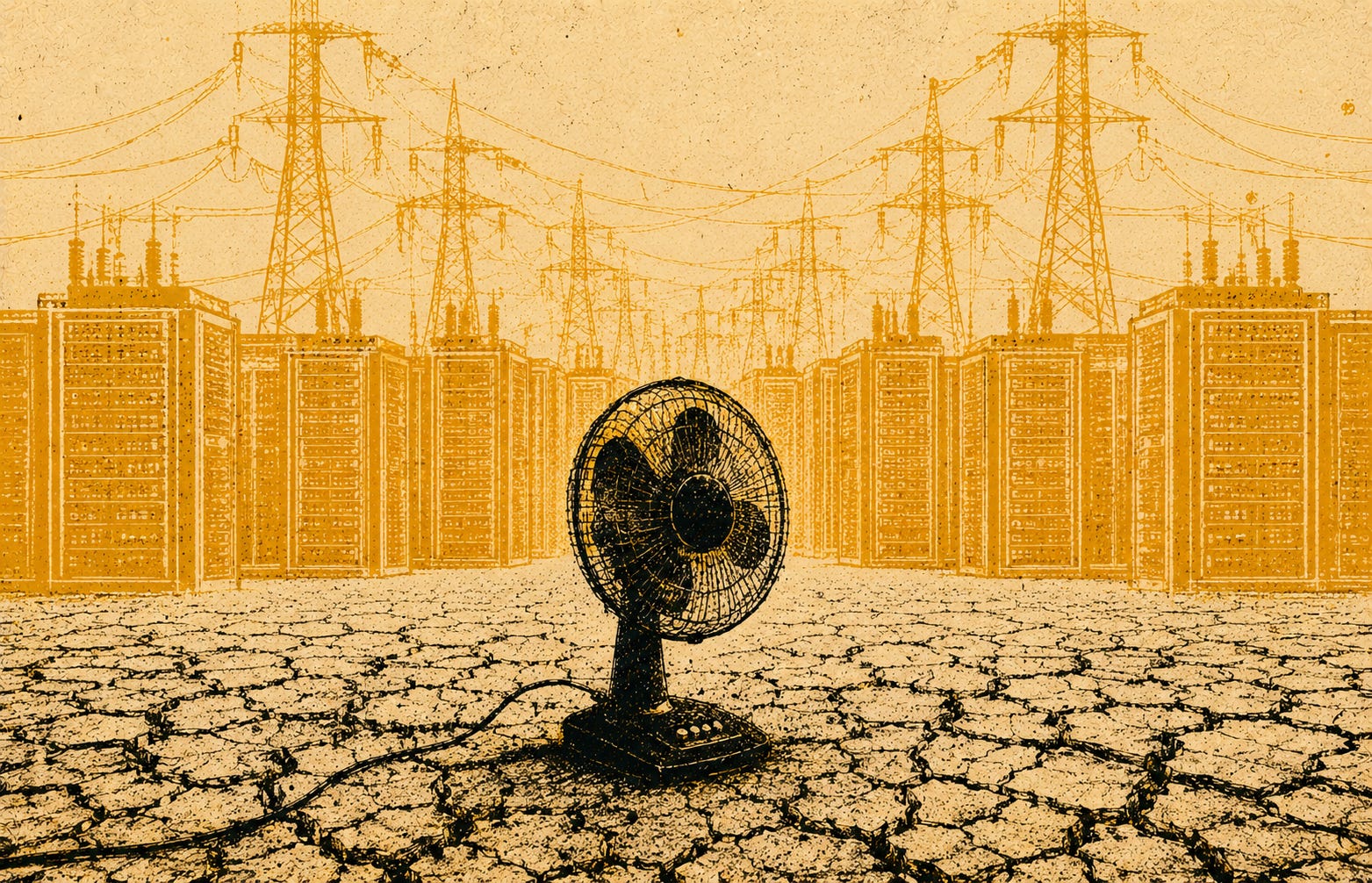
So when the government hands out tax breaks and discounted rates to get these companies here, who ends up paying for what’s left over on the grid? It’s the family with one fan running in a hot room, watching their bill go up because there’s less power to go around.
Is it really a benefit if the new jobs only pay enough to cover the higher bill that came with them?
I don’t think that’s progress. I think it’s wealth leaving a community, dressed up as progress arriving.
AI can plan a supply chain across continents. It can’t make a single drop of water for a farmer who just lost his land, and it won’t pay anyone’s electric bill.
A two-page handshake, with no real safeguards and no promise the power grid can actually handle this, isn’t forward thinking. It’s agreeing to clean up after someone else’s boom. We cool their machines with our rivers. We stretch our own grid thin so theirs never goes down. And what we get back, for now, is a press release.
If it’s not written down, it doesn’t exist yet.
Right now, the page is still mostly blank.
Curious what you think of this. Drop a comment, and let’s start a conversation