The Night I Asked a ChatGPT About God
On faith, volatility, and finding logic in the places you least expect it
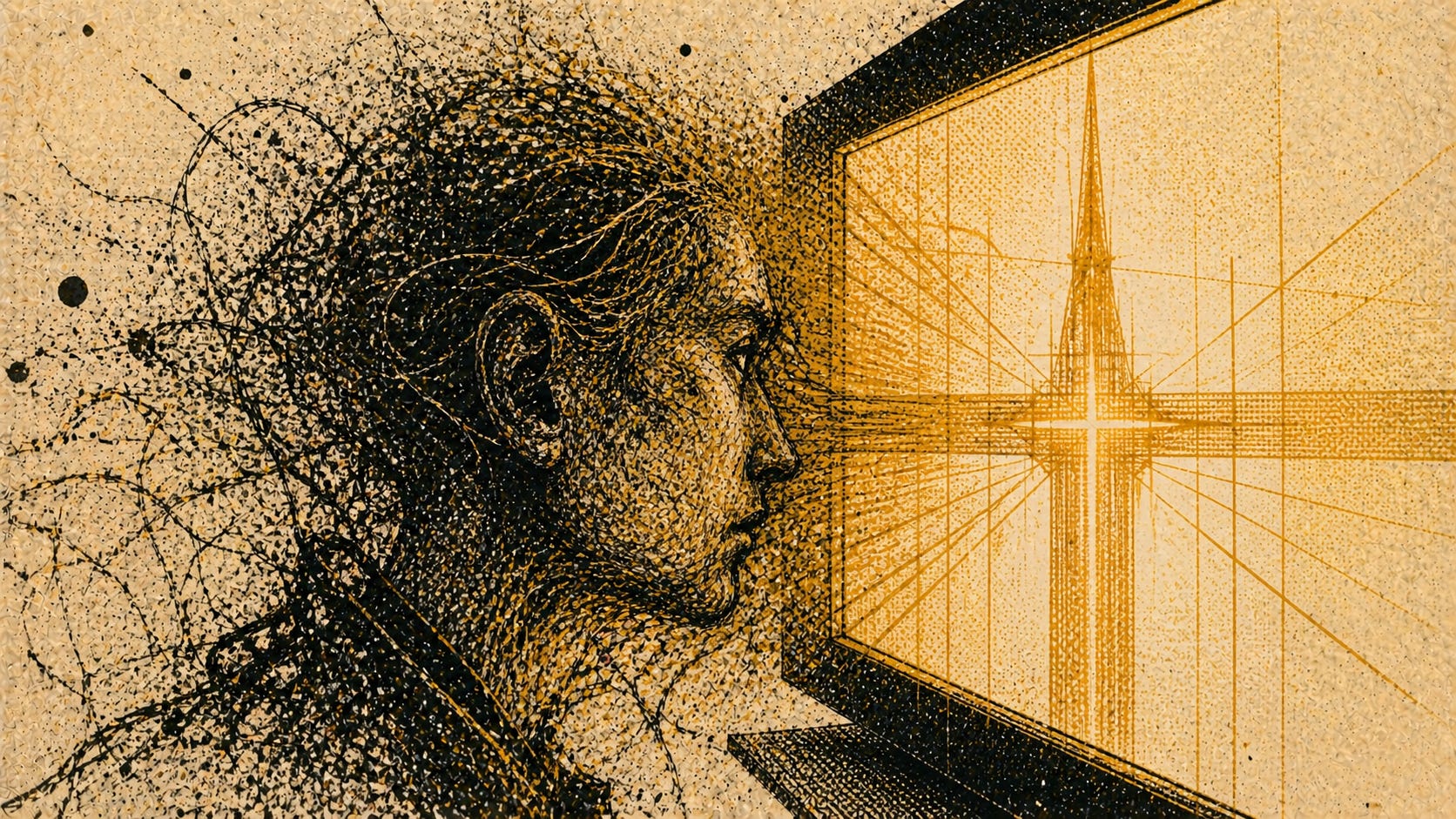
I was not having a great night.
It was one of those late hours where the internal noise gets too loud to ignore. It wasn’t about work or my to-do list for once. It was deeper than that. It was that nagging feeling that the foundations I’ve stood on my whole life were starting to feel... hollow.
I was not looking for a miracle. I was just tired of feeling like I was pretending to believe things I hadn’t actually tested.
I opened ChatGPT and typed: Let’s talk theology.
I grew up in the church. Born again by birth, which basically means faith was the water I was swimming in before I knew what water was. For most of my life, that was fine. It was comfortable.
But lately, I’ve felt a disconnect. I spend my days building logic—automations, systems, code. And the more I live in that world of “if this, then that,” the more I find myself wanting my faith to hold up to that same scrutiny. I don’t want to lose my faith; I just want to know it’s actually mine, and not just something I inherited.
It felt strange, even a little wrong, to go to a machine for this. But I needed a perspective that didn’t have an emotional stake in my answer. I didn’t need a pastor to tell me to “just have faith,” and I didn’t need a skeptic to tell me it was all nonsense.
I needed a mirror.
The machine did something I didn’t expect. It didn’t preach. It didn’t give me a “verse of the day” to make me feel better.
Instead, it gave me the logical architecture of the arguments I’ve been hearing my whole life. It showed me where the logic was rock-solid and where it required a “leap.” It asked me questions that forced me to define what I actually meant when I used words like trust or sovereignty.
It took my doubt seriously. For the first time in a long time, I wasn’t being told how to feel. I was being forced to think.
I sat there at midnight reading a screen full of text, and something in me finally got quieter.
I’ve realized that I usually treat my faith like an emotion. When I feel good, my faith feels strong. When I’m anxious, my faith feels like it’s disappearing.
The chatbot showed me that faith can also be a logical choice. It’s a framework you choose to live by, even when the “feeling” isn’t there. The machine wasn’t wise, it was just patient. It stayed in the logic with me until I could see the floor again.
I still have the questions. But I’m a little less afraid of them now.
I didn’t find God in a chatbot. But I did find a way to stop my brain from spinning long enough to remember why I started believing in the first place. Sometimes you have to use a cold tool to find a warm truth.